Key Takeaways
- When packing for a trip to the Middle East, including the Levant, United Arab Emirates, and parts of Northern Africa, being a responsible traveler by observing their cultural dress code is important for getting the most out of your visit.
- With variation and flexibility between countries, destinations, and even attractions, what is considered “modest” or appropriate may be different, making it worthwhile to double-check.
- This simple packing list offers helpful guidelines for what will be universally acceptable and comfortable to wear for the culture and climate.
In the years since we launched TravelBlogue, one of our most popular stories of all time has been our guide to demystifying resort dress codes. With the expansion of our portfolio – including the relaunch of Blue Sky Tours, now with a greater reach across the Indo-Pacific, increased pre- and post-cruise options, as well as greater availability in Europe – it seems that outfitting for an ALG Vacations® vacation isn’t quite as straightforward now as it used to be!
One of the regions that generate the most packing questions for travelers has been the Middle East.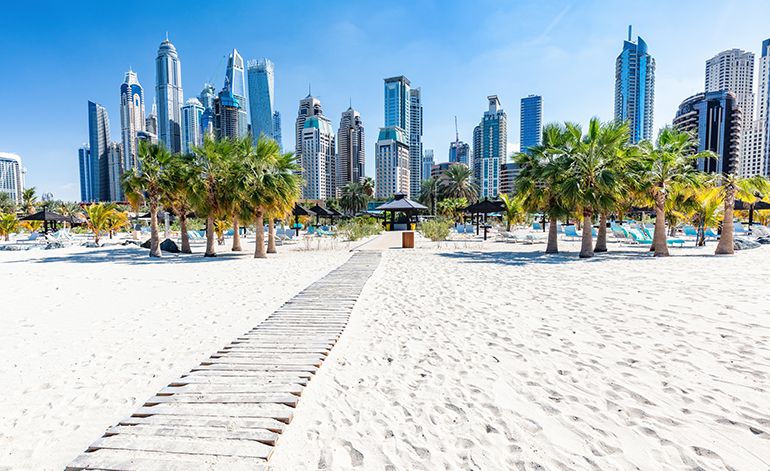 It’s widely known that a more conservative style is favored in this part of the world, both for cultural respect and protection against the elements, like sand and sun. But “conservative dress” is its own spectrum, and climates, lifestyles, activities, landscapes, and Western influence vary across the countries that make up the Middle East. And with modern, high-end luxury prolific across the United Arab Emirates, how much is too much?
Not to worry – we did the legwork for you and your customers. Here’s what you should pack, wear, and how to dress for destinations like (and beaches in!) Doha, Dubai and Abu Dhabi in the Arabian Peninsula; Israel, Jordan, and Lebanon in the Levant; and core nations like Egypt and Turkiye nearby.
Loose & Relaxed
There are some parts of the Middle East that this is the literal guideline for dressing, and others where it more reflects the attitude of how visitors are clothed.
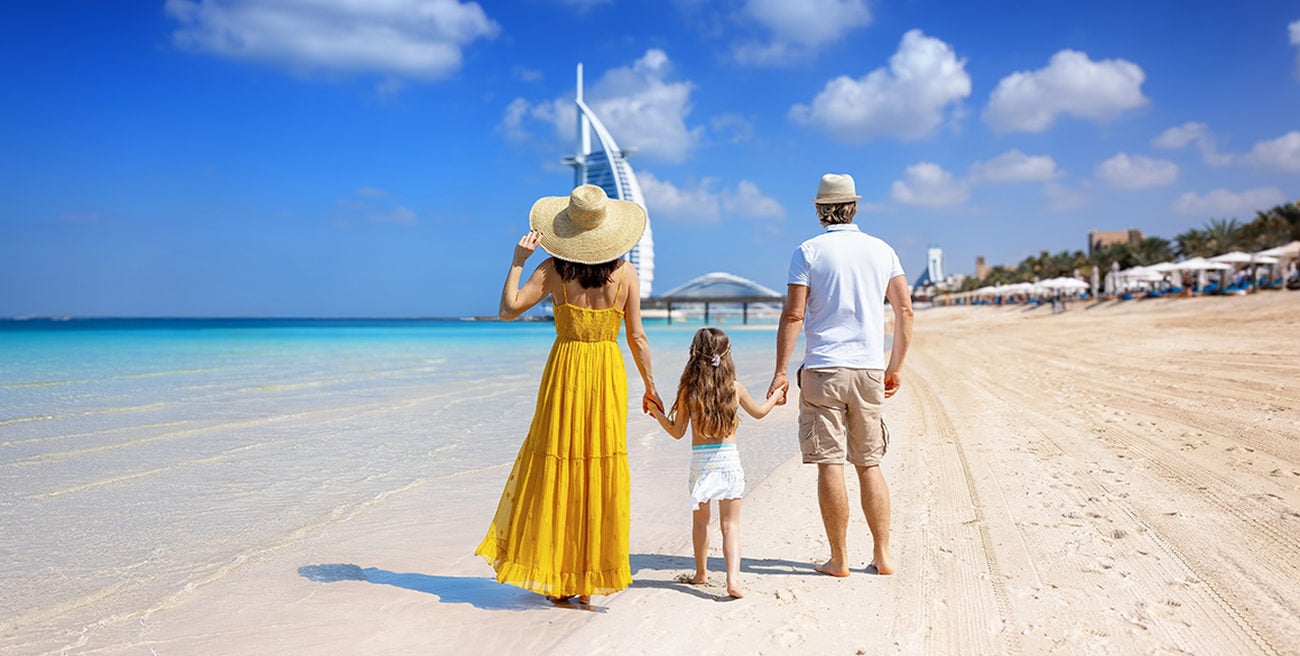
In the United Arab Emirates, Westerners are expected to adhere to resort’s dress code, which can be similar to those closer to home. For example, in Kuwait and Israel, Western dress is the norm. And in Dubai, the most relaxed city in the UAE regarding clothing, you can wear a bikini at your hotel beach and pool, and gym clothes for sports, but you’ll still be expected to keep your outfit within context. For instance, casual basketball shorts on men are not acceptable attire for walking around, but are fine on the court. And just like with European churches, you’ll be expected to keep your knees, shoulders, and chest covered up when visiting a religious site. Same as with those sites, you’ll be turned away if dressed inappropriately.
Meanwhile, in Iran, all women, even tourists, are required to don hijabs covering their hair and loose tunics to avoid the attention of morality police.
It's therefore important to:
- Research the specific rules of not only the country, but city, you’ll be visiting to ensure compliance
- Look up regulations for public spaces and historical sites and attractions, from malls to mosques
- Carry back-up cover-ups just in case, like a light shawl or tunic (for both men and women)
The good news is that most public places display clear signage about dressing expectations, so you’ll know when to pull that scarf out. But for everyday dress, comfortable, loose-fitting clothing is welcome and practical for the heat, and light layers can be your best bet.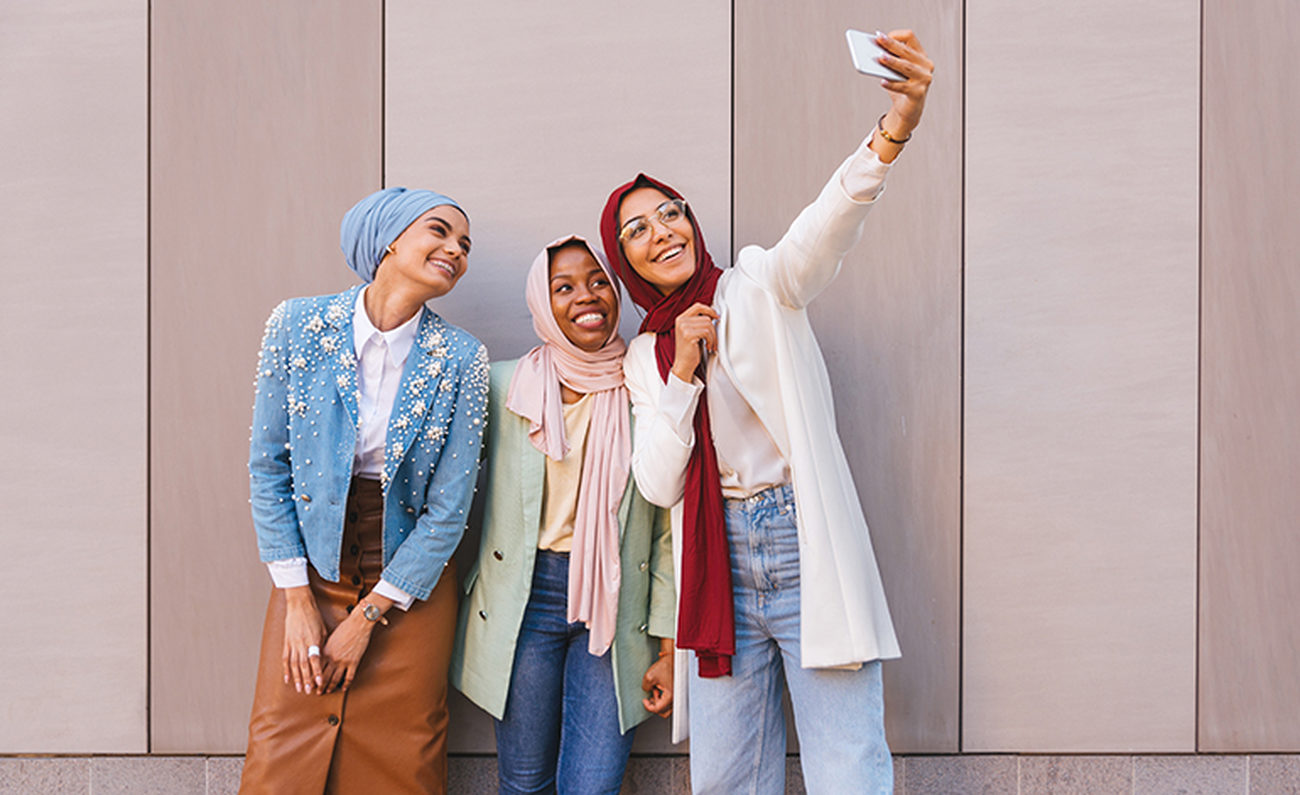
Bring This
Keeping your arms, legs, back, and chest covered is the most general rule of thumb. These are the articles of clothing that effortlessly do the trick.
Women should pack:
- Maxi dresses that cover the shoulders
- Long, flowing skirts, with midi length as the shortest
- Wide-leg, high-waisted loose pants
- Loose-fitting shirts or blouses with long or short sleeves
- Long shirts; best if they extend past your bottom!
- Kaftans, abayas, tunics, and other breezy styles
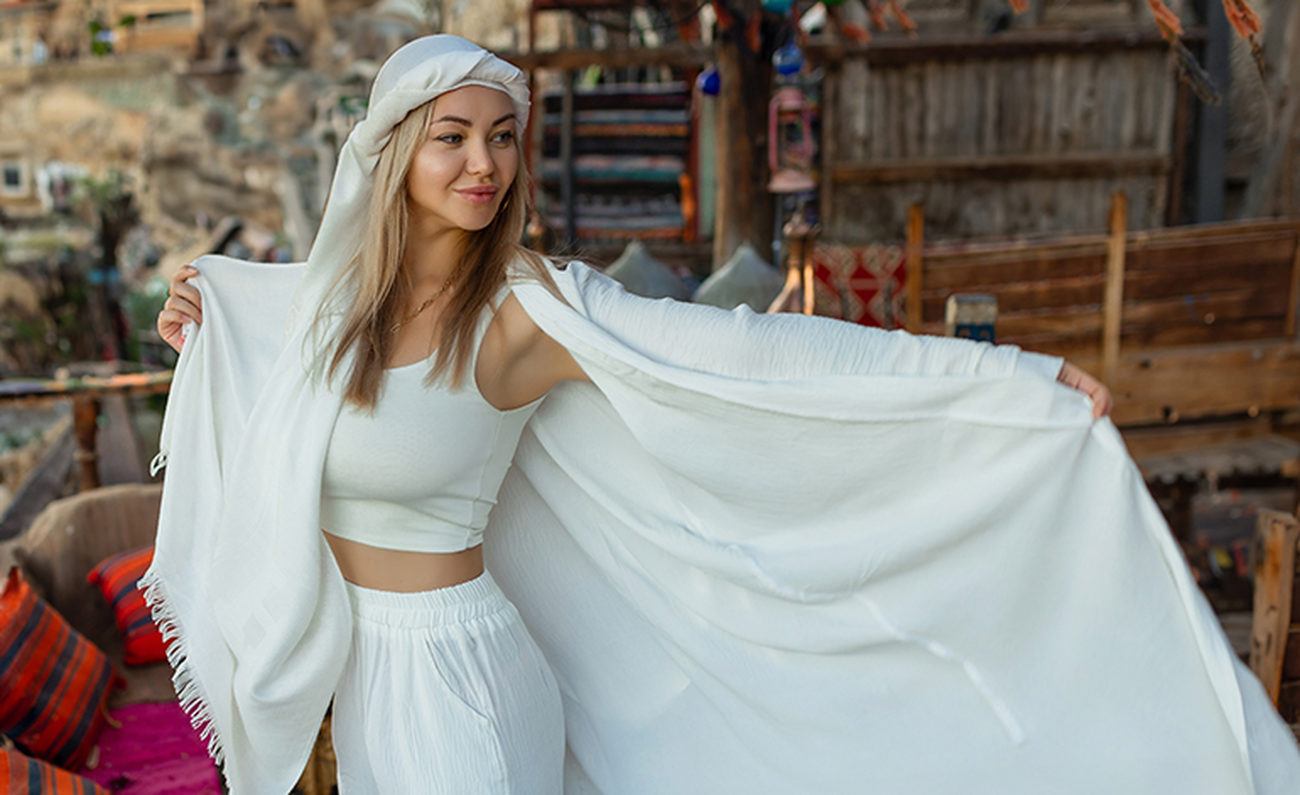
- A shawl, headscarf, or pashmina, as heads must always be covered at religious sites
- Comfortable, sturdy sandals, sneakers, or hiking shoes
Men should pack:
- Long trousers or jeans (although knee-length shorts are generally acceptable in tourist areas)
- T-shirts or other shirts with sleeves intact
- Button-down shirts with long or short sleeves
- Comfortable, sturdy sandals, sneakers, or hiking shoes

Avoid These
What makes clothing offensive at home is different from what makes it considered so abroad. Dressing with their societal norms in mind is a sign of respect, like trying to at least say “bon jour” in France. Some of the types of clothes they ask folks not to wear in public are items you may not even wear anyway (like jorts with big holes in them or fishnet tops with nothing under them!), making it simple not to bring them.
Men and women should both leave these kinds of styles at home:
- Cut-off sleeves or sleeveless items like tank tops
- Shorts that fall above the knee (although to err on the side of caution, women should leave all shorts at home)
- Tight shirts with low cuts or cropped hems
- Transparent or sheer clothing
- Tight pants or shorts, including leggings, bike shorts, or other fitness gear
- Ripped pants, jeans, or trousers
Leveling Up Your Style
While covering up is important in traditionally Muslim cultures, luxurious touches add more fun and fashion to a more modest look. Common ways to elevate this look include:
- Choosing high-quality fabrics like silk, chiffon, crepe, linen, and high-quality cotton
- Visible embellishments like detailed embroidery, beadwork, metallic thread, and other handiwork
- Cape, balloon, and other unique sleeves for A-line silhouettes for formal occasions
- Exploring looks by local designers or modest lines by high fashion houses like Dior or Gucci
- A great purse or, for both genders, a gorgeous belt bag and nice shoes dress up any outfit the same way as they do at home!


The Bottom Line
It’s easy to stay stylish and easier still to be comfortable when traveling in the Middle East. Eliminating tight-fitting, cropped clothing from your packing list in favor of loose, airy, breezy clothes can be practical and liberating, especially if you plan to be out and about in the sun exploring the souks, desert, historical sites, and cultural landmarks. The “rules” aren’t as strict as you might think! But the range of expected modesty varies by country, city, and even attraction, so use the above as a general guideline, but check where you’re going to find out how closely you might be required to adhere to the more conservative side of the spectrum.